

Responsibility
Use less vehicle for the journey. Choose carefully what goes into it. Plan for a useful life.
Electric, cobalt-free
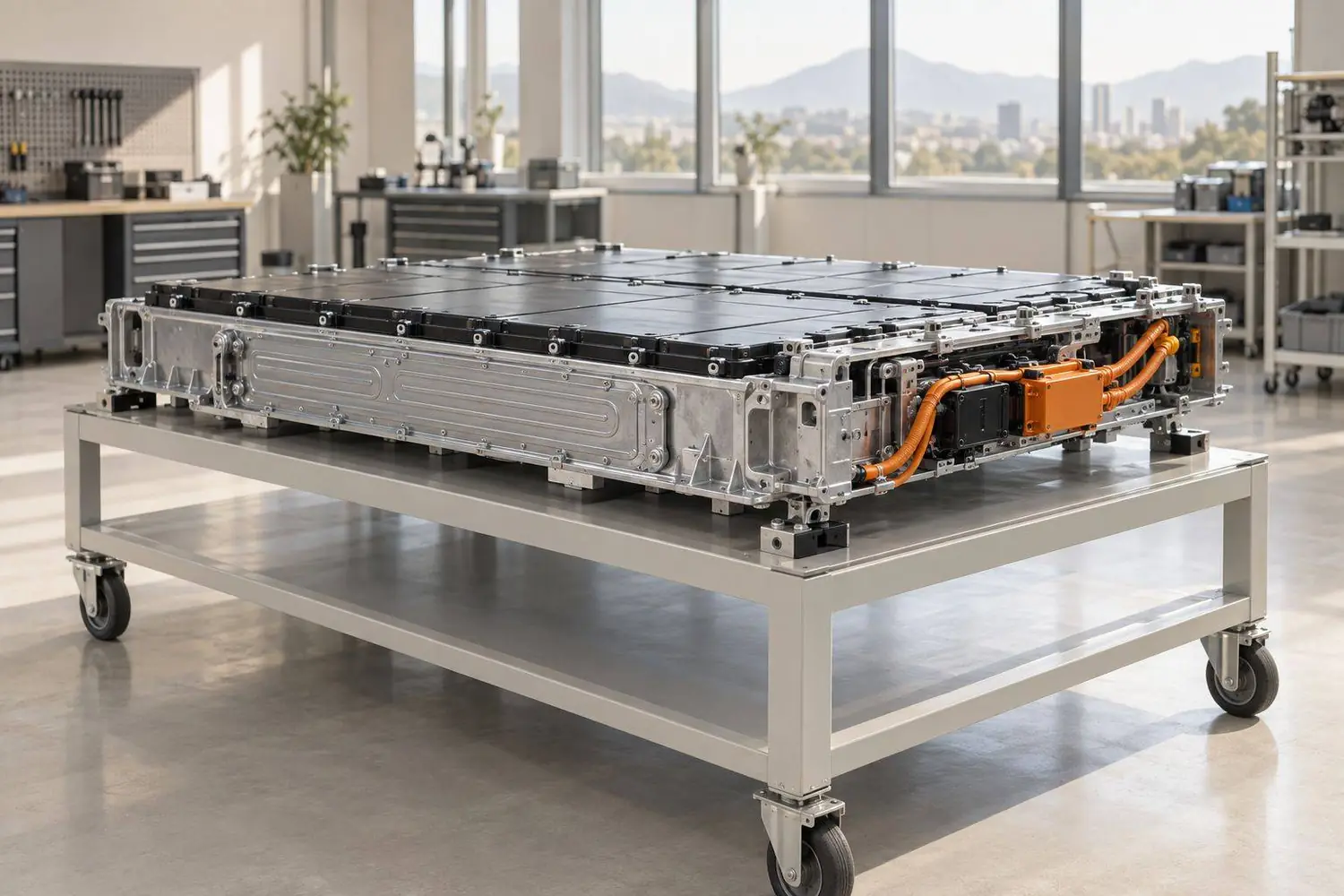
The selected platform uses lithium iron phosphate cells, whose cathode contains neither cobalt nor nickel. Pack life and hot-weather performance depend on the final system, charging routine and operating conditions.
A small battery on purpose
Approximately 28 kWh in the three-door and 42 kWh in Emerald are the programme’s reference packs. Daily range must be established on the actual route, with cooling and repeated stops included. A smaller pack means less material, less weight, and faster turnaround at the depot.
Built to be kept
Every vehicle has a build number and a record. The service plan calls for local parts stock in the Kingdom. Panels, trim and glass are designed to be replaced, not the vehicle.
Honest about heat
We distinguish published laboratory range from QAF duty targets at 45 °C. Representative finished vehicles must be tested before those targets become performance claims.
Energy where the grid is thin
Proposed battery-buffered chargers can help balance a site’s available electrical supply with short charging peaks. Capacity and daily throughput require a site-specific assessment. How the depot works.

Right-sized
Less vehicle for the journey means less battery, less road space and less energy to cool.
The most responsible kilometre is the one served by the smallest object that can carry it with dignity.